
If you follow AI and smartphone technology as closely as I do at AI Tech Pulse, you have probably noticed something interesting about Apple this year. The conversation around the next iPhone is no longer just about cameras, battery life, or a thinner design. In 2026, the biggest question is becoming much more important: how smart will the iPhone actually become?
The iPhone 18 Pro AI features could be the answer.
Apple is expected to unveil the iPhone 18 Pro and iPhone 18 Pro Max in September 2026, alongside a rumored foldable model that has been widely referred to as the iPhone Ultra. Recent reports suggest the September lineup could represent one of Apple’s most interesting iPhone launches in years. However, it is important to remember that several hardware details surrounding these phones remain rumors until Apple officially confirms them.
What makes this year’s launch different is that the hardware story is happening at the same time as Apple’s much bigger AI push.
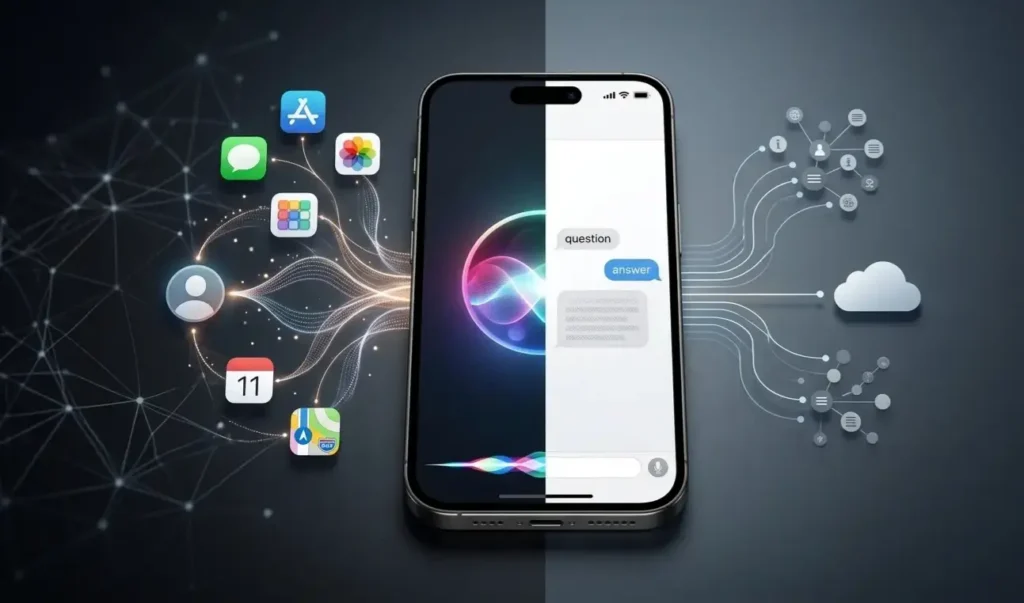
At WWDC 2026, Apple officially introduced its next generation of Apple Intelligence and a completely redesigned Siri AI. Apple says the new Siri can understand personal context, work with information across apps, understand what is happening on your screen, answer questions using broader knowledge, and perform actions across the system.
That changes the way we should look at the iPhone 18 Pro.
Instead of asking only, “How fast is the new iPhone?” we should be asking, “What can it actually do with that extra intelligence?”
And that is exactly what we are going to explore in this article.
I have picked three AI-related upgrades that could make the biggest difference to everyday iPhone use. Some are based on Apple’s confirmed software direction, while others depend on current reports about the iPhone 18 Pro hardware. So throughout this guide, I will clearly separate what Apple has confirmed from what is still expected or rumored.
Let’s start with the upgrade that could quietly become the foundation for everything else.
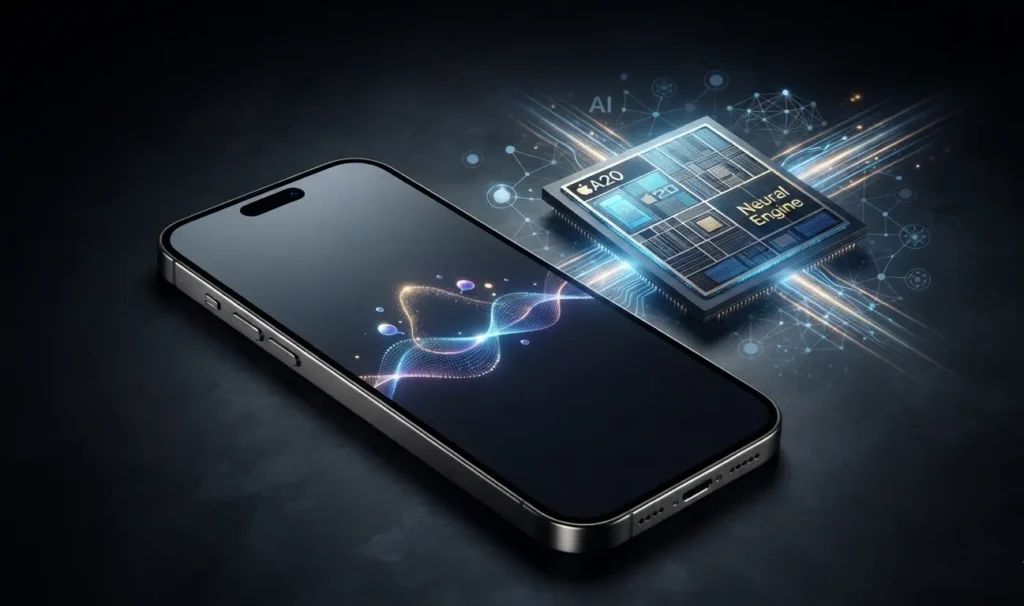
1. A20 Pro Could Give Apple Intelligence a Serious Boost
When people hear about a new iPhone processor, they usually think about gaming, app loading, camera processing, or benchmark scores.
But the rumored A20 Pro chip could have a much bigger job on the iPhone 18 Pro.
Current reports suggest that Apple’s next Pro chip could move to TSMC’s first-generation 2nm manufacturing process, compared with the 3nm process used for the A19 Pro. Reports also point to a new packaging approach that could improve performance and power efficiency.
Why does that matter for AI?
Because artificial intelligence is becoming increasingly dependent on the hardware running underneath it.
Apple’s latest Foundation Models are designed to work across both on-device processing and Private Cloud Compute. Apple says its newest architecture includes on-device models as well as more powerful server-based models, allowing Apple Intelligence to handle different tasks while maintaining its privacy-focused approach.
| AI Area | What Could Improve | Why It Matters |
|---|---|---|
| On-device AI | Faster local processing | Less dependence on cloud |
| AI responses | Faster processing of complex tasks | Smoother everyday experience |
| Power efficiency | Better performance per watt | Potentially better battery efficiency |
| Apple Intelligence | More capable AI workloads | Smarter iPhone features |
| Developer AI | More powerful AI experiences in apps | More useful third-party apps |
That means the processor is no longer just responsible for making your iPhone feel fast.
It is increasingly part of the AI experience.
Faster AI Without Constantly Sending Everything to the Cloud
One of the most interesting parts of Apple’s AI strategy is its focus on on-device processing.
Think about something simple.
You ask your iPhone to understand a sentence, summarize some information, recognize something on your screen, improve your writing, or perform a small intelligent action. If the task can be handled directly on the device, the phone does not necessarily need to send the entire request to a remote server.
That can mean faster responses, less dependence on an internet connection, and potentially better privacy.
Apple’s Foundation Models are specifically designed for this type of hybrid architecture. The company says some models run directly on the device, while more demanding requests can use Private Cloud Compute.
This is where the rumored A20 Pro becomes interesting.
A more powerful and efficient processor could give the iPhone 18 Pro more headroom for these AI workloads. It does not automatically mean every AI feature will be exclusive to the new phone, but stronger hardware can make demanding on-device processing more practical.
And that could become one of the biggest hidden advantages of the iPhone 18 Pro AI features.
The AI Upgrade You May Not Notice at First
The most important AI improvements are not always the flashy ones.
A phone that generates a crazy image in a few seconds looks impressive. But a phone that understands your request correctly, remembers the context of what you are doing, recognizes what is on your screen, and completes an action without making you repeat yourself could be much more useful.
That is the direction Apple is now taking.
Apple says its new Siri AI can use personal context from information such as messages, emails, and photos. It can also understand onscreen content and perform actions across apps.
Imagine this:
You receive a message from a friend saying:
“Let’s meet next Friday at 7.”
Instead of manually checking the conversation, opening your calendar, creating an event, and entering the details yourself, a smarter Siri could potentially understand the context and help you turn that information into an action.
The difference is subtle.
The old smartphone model makes you operate the phone.
The AI-focused smartphone is starting to let the phone understand what you are trying to accomplish.
That is a much bigger change.
Why the A20 Pro Matters for the iPhone 18 Pro AI Features
It would be easy to look at the rumored A20 Pro and say, “Okay, another faster Apple chip.”
I don’t think that tells the full story.
Apple’s AI ambitions are becoming increasingly connected to its silicon.
The company has already built its Apple Intelligence architecture around a combination of on-device models and Private Cloud Compute. Its latest on-device Foundation Models include a core model and a more powerful multimodal model designed for capabilities such as expressive voices and improved dictation.
That means future iPhones need enough processing capability to handle increasingly sophisticated AI tasks without turning into battery-draining machines.
A more efficient manufacturing process could help Apple balance those two requirements:
more AI processing + better power efficiency.
Of course, we should not treat every A20 Pro rumor as confirmed. Apple has not publicly revealed the complete specifications of the iPhone 18 Pro at the time of writing. The 2nm A20 Pro information comes from reports about Apple’s upcoming hardware rather than an official iPhone specification sheet.
But if those reports are accurate, the processor could be much more important to the AI story than the usual yearly performance upgrade suggests.
The video above explores the expected A20 Pro upgrades and how Apple’s next-generation chip could improve the iPhone 18 Pro experience.
What This Could Mean for Everyday Users
For a normal iPhone owner, you probably won’t wake up on launch day and see a giant button saying:
“A20 Pro AI MODE.”
That’s not how this works.
Instead, the improvements could appear throughout the operating system.
Siri could respond more naturally.
Writing tools could understand context better.
Visual intelligence could become more useful.
Voice interactions could feel less robotic.
On-device AI tasks could become faster.
Apps could potentially use Apple’s Foundation Models to provide smarter experiences.
Apple’s developer platform is also expanding around this idea. Apple says developers can integrate their apps with Siri AI and system-level actions through App Intents, while the Foundation Models framework allows developers to build intelligent experiences using Apple’s models.
That last point is particularly important.
The real AI revolution may not come from one Apple app.
It could come from hundreds of apps becoming smarter at the same time.
Imagine opening a travel app and asking it to reorganize your itinerary. Or using a notes app that can understand your previous entries and help you find exactly what you need. Or asking Siri to locate something buried inside your messages and then perform the next step for you.
The phone starts becoming less like a collection of separate apps and more like one intelligent system.
That is potentially much more significant than another 10 or 15 percent performance increase.
But Is This Really Exclusive to the iPhone 18 Pro?
Here is where things get interesting.
Not every new Apple Intelligence feature will necessarily require an iPhone 18 Pro.
Apple has already stated that its next-generation Apple Intelligence features are coming to supported devices, and some existing iPhones will receive Apple’s new software capabilities.
So buying an iPhone 18 Pro simply to get “AI” would be an oversimplification.
The difference may instead come down to how much AI the hardware can handle locally, how quickly it can handle it, and which advanced features Apple decides to limit to newer chips.
We have already seen Apple use hardware requirements for certain AI experiences.
For example, current iOS 27 beta reporting indicates that some newer Siri voice capabilities require devices with sufficient memory and processing capability.
That gives us a clue about where Apple could be heading.
As AI models become more capable, hardware requirements can become more important.
And that is why the A20 Pro could quietly become one of the most important parts of the entire iPhone 18 Pro story.
What About the Rumored iPhone Ultra?
The iPhone Ultra is a different story.
Unlike the iPhone 18 Pro, Apple’s rumored foldable iPhone has not been officially announced. Current reports suggest Apple could introduce a foldable model alongside the Pro lineup in September, with a large internal display and a smaller outer screen.
If that happens, AI could become even more interesting on a foldable device.
A larger screen gives an intelligent assistant more space to display information, compare results, manage multiple tasks, and interact with apps.
But we need to be careful here.
The AI capabilities of the rumored iPhone Ultra are still speculative. Apple has not officially confirmed the device’s final name, design, specifications, or AI feature set.
So for now, the safer conclusion is this:
The iPhone 18 Pro is where Apple’s confirmed AI direction and rumored next-generation hardware come together. The iPhone Ultra could take that idea into a new form factor, but its exact AI capabilities remain unknown.
And honestly, that makes the September launch even more interesting.
The Bigger Picture
The biggest change coming to the iPhone may not be something you can see from the outside.
It could be the intelligence underneath the screen.
Apple has spent years building its own chips, and now those chips are becoming increasingly important to its AI strategy. With Apple Foundation Models, Private Cloud Compute, and the new Siri AI experience, the company is clearly moving toward an iPhone that can understand more context and perform more useful actions.
If the A20 Pro rumors are accurate, the iPhone 18 Pro could provide the hardware foundation for that next step.
And this is only the first AI feature we need to discuss.
Because the second one could be much more visible to everyday users.
Siri AI Could Finally Become the iPhone Assistant We Were Promised
If there is one AI upgrade that could make the iPhone 18 Pro feel genuinely different, it is not another camera mode or a slightly faster processor.
It is Siri.
For years, Siri has been useful for simple commands. You could set an alarm, make a call, send a message, ask for the weather, or start a timer. But when conversations with AI assistants became much more advanced, Siri started to feel like it was standing still.
That is changing.
Apple has now shown a much more ambitious direction for Siri, with the company describing a new generation of AI capabilities designed to understand personal context, recognize what is on your screen, and take actions across apps.
And this is where the iPhone 18 Pro AI features become much more interesting.
Instead of Siri simply answering a command, Apple wants Siri to understand what you mean, what you are looking at, and what you are trying to accomplish.
That sounds like a small difference.
It isn’t.
| Siri AI Capability | What It Could Do | Everyday Example |
|---|---|---|
| Personal Context | Understand information across apps | Find a travel detail from your messages |
| Screen Awareness | Understand what you’re viewing | Ask about something shown on screen |
| Cross-App Actions | Work across multiple apps | Find information and add it to Calendar |
| Natural Conversation | Understand follow-up questions | Continue a conversation without repeating context |
| AI Actions | Complete tasks instead of only answering | Create reminders, find content, or perform actions |
Siri Is Moving From Voice Assistant to AI Agent
Think about how you normally use Siri.
You say:
“Set a reminder for 8 PM.”
Siri does it.
That’s useful, but it is basically a command-and-response system.
Now imagine saying:
“Remind me to bring the documents we discussed yesterday when I leave for work tomorrow.”
A truly intelligent assistant needs to understand what “the documents” means, remember the previous conversation, understand when “tomorrow” is, and connect all of that information together.
This is much closer to how people communicate with each other.
Apple’s new Siri direction is designed around exactly this type of contextual understanding. Apple says the assistant can use information across apps and personal context to provide more relevant help.
That could make Siri feel less like a voice-controlled search box and more like an assistant that actually understands the situation.
Personal Context Could Be the Biggest Change
This is one of the most exciting parts.
Your iPhone already contains an enormous amount of information about your digital life.
Messages.
Emails.
Photos.
Calendar events.
Notes.
Contacts.
Files.
Locations.
Apps.
Until now, these pieces of information have mostly remained separate.
The new Siri experience is designed to understand more of that context.
For example, imagine you received a flight confirmation through email several days ago.
Later, you ask:
“When should I leave for the airport?”
Instead of giving you a generic answer, a more context-aware Siri could potentially understand which flight you mean, check the relevant details, consider information available to it, and help you plan the next step.
The important word here is context.
AI becomes much more useful when it understands the information surrounding a question rather than treating every request as a completely separate conversation.
That is why Apple’s new Siri could become one of the most important iPhone 18 Pro AI features to watch this year.
Siri Could Understand What Is on Your Screen
Now let’s make things even more interesting.
Imagine you are looking at a message someone sent you.
There is an address in the conversation.
Instead of copying the address, opening Maps, pasting it, and then finding directions, you could potentially ask Siri about the information directly from the screen.
Apple has described a Siri experience that can understand onscreen content and use that context to help users take actions.
This may sound like a small convenience.
But think about how many times you currently move information manually between apps.
You copy something from Messages.
Paste it into Notes.
Open Safari.
Search for something.
Switch back to Messages.
Open Calendar.
Create an event.
AI can potentially reduce some of those steps.
The goal is not simply to make Siri answer questions faster.
The goal is to make the iPhone understand what you are already doing.
And that is a much more powerful idea.
Apple AI / Siri discussion
From Apps to Actions
This is where Apple’s AI strategy could become particularly interesting for developers.
Apple has been building its App Intents system so apps can expose actions that Siri and Apple Intelligence can use. Apple says developers can make their apps more deeply integrated with Siri and system-level actions.
In simple words, your apps could potentially become tools that Siri can operate for you.
Imagine telling Siri:
“Find that restaurant Sarah recommended, check the details, and add it to my weekend plans.”
Instead of you opening three different apps and doing everything manually, Siri could potentially coordinate the steps.
Or imagine:
“Find the photo from last summer where I’m standing near the beach and send it to John.”
That is a much more complicated request than:
“Set an alarm.”
It requires understanding language, searching information, identifying the relevant photo, recognizing the contact, and completing an action.
This is where AI assistants begin to resemble AI agents.
They don’t simply answer.
They do things.
The Difference Between Siri and a Chatbot
This distinction is important.
You can already open ChatGPT, Gemini, or another AI chatbot and ask complicated questions.
So why would Apple’s Siri matter?
Because Siri lives inside the operating system.
It has access to system-level functions and, with Apple’s newer AI architecture, can potentially interact with information and actions across the device.
A chatbot might tell you how to create a calendar event.
Siri can potentially help create the event.
A chatbot might explain how to send a photo.
Siri can potentially help you send it.
A chatbot might tell you where a file is.
A system-level assistant can potentially help you locate and use it.
That difference could become increasingly important.
The future of smartphone AI may not simply be about better answers.
It may be about better actions.
Apple Is Taking a Privacy-First Approach
There is another reason Apple’s AI strategy deserves attention.
Personal context is powerful, but it also raises an obvious question:
How much of your private information should an AI system be allowed to see?
If an assistant can understand your emails, messages, photos, calendar, and files, privacy becomes extremely important.
Apple has positioned its AI architecture around on-device processing wherever possible, while using Private Cloud Compute for requests that need more powerful processing. Apple says these cloud-based requests are designed around privacy protections and that user data is not stored or made accessible to Apple.
That approach could become one of Apple’s biggest advantages in the AI race.
Companies are competing to build increasingly capable AI assistants, but users also want to know what happens to their personal information.
Apple’s strategy is essentially:
Make the AI smarter without turning the user’s private life into an open data source.
Whether Apple can deliver that promise at massive scale remains something we will have to watch closely.
But the direction is clear.
Will the iPhone 18 Pro Really Need All This Power?
This brings us back to the hardware.
If Siri becomes more intelligent, understands more context, processes more information, and performs more complicated actions, the iPhone needs enough processing power to keep the experience smooth.
That is where the rumored A20 Pro chip becomes relevant again.
As we discussed in Part 1, reports suggest Apple’s next-generation Pro chip could use a more advanced manufacturing process and bring improvements in both performance and efficiency. Those reports are not yet an official Apple specification, so they should be treated as expectations rather than confirmed facts.
But if Apple’s AI ambitions continue growing, more capable hardware makes sense.
Nobody wants an AI assistant that takes 10 seconds to respond to a simple request.
Nobody wants an intelligent feature that drains the battery after a few hours.
And nobody wants the phone constantly sending information to the cloud because the device cannot handle the workload.
Apple’s advantage could come from controlling both sides of the equation:
the silicon and the software.
That is something few companies can replicate in exactly the same way.
What About the iPhone Ultra?
The rumored iPhone Ultra could make this even more interesting.
If Apple really launches a foldable iPhone this September, the larger internal display could give AI features more room to breathe.
Imagine opening the phone and asking Siri to summarize a long document while keeping your notes visible beside it.
Or comparing travel options on a large screen while Siri helps organize the information.
Or using AI to interact with several apps without constantly switching between them.
A foldable form factor could make an AI assistant feel more like a desktop-style productivity tool.
But there is an important warning here.
The iPhone Ultra remains a rumored product until Apple officially announces it. Its final name, design, specifications, price, and AI capabilities should not be treated as confirmed facts.
So while the idea is exciting, we should separate the potential from the confirmed information.
The Real Question Is: Will Siri Finally Feel Natural?
This might be the biggest test of all.
People don’t want to speak to their phones like robots.
They want to talk normally.
If you forget the exact name of something, you should not have to restart the sentence.
If you mention something from an earlier conversation, the assistant should understand what you mean.
If you are looking at something on your screen, you should not have to explain everything from scratch.
That’s what makes human conversation feel natural.
And that is exactly what modern AI has started teaching consumers to expect.
Apple is now trying to bring that expectation into Siri.
If it works as promised, the biggest iPhone 18 Pro AI features may not be the ones Apple highlights for five minutes during the September keynote.
They may be the small moments you experience every day.
The moment Siri understands what you mean.
The moment it finds something you forgot about.
The moment it recognizes what is on your screen.
The moment it completes a task instead of simply telling you how to do it.
That is when an AI assistant starts feeling genuinely useful.
But There Is Still One Major Problem
Apple’s AI journey has not been completely smooth.
The company previously promoted major Siri improvements that were delayed, and this history means consumers have good reason to remain cautious about future promises.
That does not mean Apple’s new Siri will fail.
It simply means we should judge the finished product rather than the marketing.
The September launch will be important because users will finally get a clearer picture of how much of Apple’s AI vision is ready for everyday use.
And if the new Siri can combine personal context, screen awareness, cross-app actions, and Apple’s privacy architecture without making the experience complicated, it could become a major reason to upgrade.
But Siri is only Feature #2.
The third AI feature could be even more interesting because it moves beyond the assistant itself.
It is about how the iPhone understands the world around you.
And that could change everything from searching for information to identifying objects, understanding images, and interacting with what you see through the camera.
AI That Understands What You See Could Change the iPhone Experience
We have already looked at two major parts of Apple’s AI strategy: the expected next-generation hardware that could power more demanding AI workloads and the completely redesigned Siri AI experience.
But there is one more area that could make the iPhone 18 Pro AI features feel genuinely different in everyday life.
It is the ability for your iPhone to understand what you are looking at.
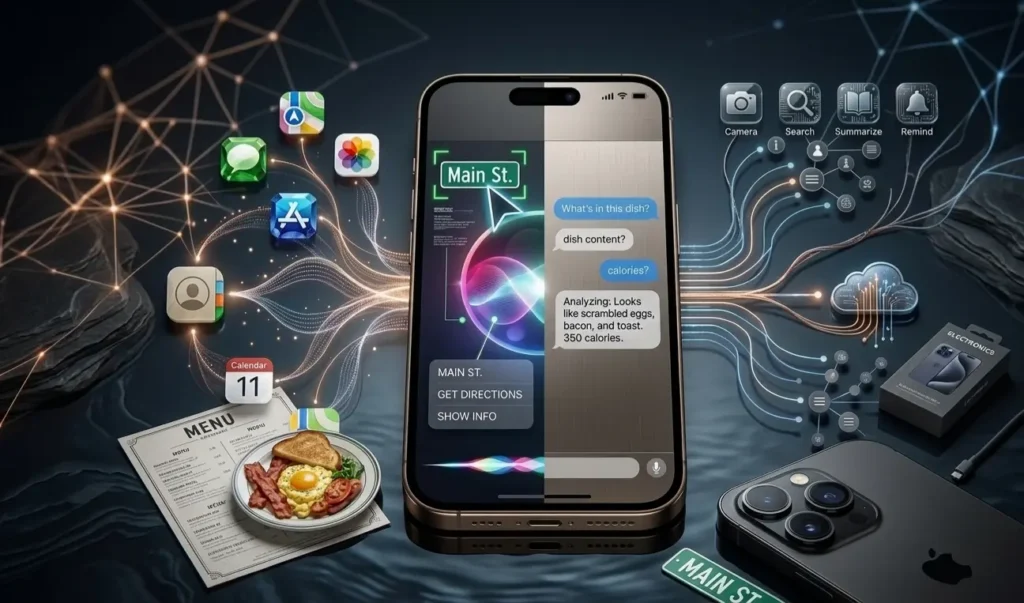
Apple has already previewed an expanded Visual Intelligence experience as part of its next generation of Apple Intelligence. The company says Siri AI can understand onscreen content, while Visual Intelligence can help users interact with information around them and on their screens.
This is where the iPhone starts moving beyond being an AI chatbot in your pocket.
Instead, it becomes something that can potentially see, understand, and help you act on information.
3. Visual Intelligence Could Turn Your Camera and Screen Into AI Tools
Think about how you use your iPhone camera today.
You take a photo.
You scan a document.
You identify an object.
You search for something you saw.
But AI can take that experience much further.
Instead of simply capturing an image, your phone can analyze what is in front of you and help you understand it.
Apple’s expanded Visual Intelligence is designed to work with both the physical world and information displayed on the screen. The company has highlighted capabilities that can help users learn about what they see and interact with relevant information.
Imagine walking into a store and seeing a product you don’t recognize.
You could point your iPhone at it and ask:
“What is this, and what is it used for?”
Or imagine someone sends you a screenshot containing an event announcement.
Instead of manually reading the details and creating a reminder yourself, an AI-powered iPhone could potentially understand the information and help you turn it into an action.
The camera is no longer just a camera.
The screen is no longer just a screen.
Both become sources of information that AI can understand.
Why This Could Be More Useful Than Another AI Chatbot
We already have plenty of AI chatbots.
You can ask them questions.
You can upload images.
You can describe a problem.
But your smartphone has one major advantage:
It is physically with you.
It has a camera.
It has a screen.
It knows which apps you are using.
It can understand information you are looking at.
And it can potentially connect that understanding to actions on the device.
That combination makes smartphone AI different from simply opening a chatbot in a browser.
Imagine you are reading a restaurant menu.
Instead of typing every dish into an AI assistant, you could potentially use your camera and ask for help understanding the menu.
Or imagine you are looking at a complicated document on your screen.
Instead of copying the entire text into another application, AI could help you understand or summarize the relevant information.
These are the small moments where AI becomes genuinely useful.
And that is what Apple appears to be targeting with Visual Intelligence.
AI Could Understand More Than Just Pictures
The word “visual” can make this sound like a camera-only feature.
It is much broader than that.
Apple’s new Siri AI is designed with onscreen awareness, meaning it can understand what is currently displayed on your device. Apple has also highlighted the ability to bring information from the screen into Siri interactions.
That could make normal smartphone tasks much easier.
For example, imagine you are looking at an email containing a date.
You could ask:
“What is this date for?”
Instead of explaining which email you mean, the assistant already has the screen context.
Or you are reading a message containing an address.
You could ask:
“Where is this?”
Again, the information is already in front of the assistant.
This removes a frustrating step from AI interactions.
You don’t always have to explain the context.
The device can see it too.
The iPhone Could Become More Like an AI Agent
This is the bigger trend behind all three features.
The smartphone is gradually moving from being a device that waits for commands to one that can understand situations and perform actions.
That is the basic idea behind an AI agent.
A chatbot answers.
An AI assistant understands.
An AI agent can potentially take action.
Apple’s App Intents framework is important here because it allows developers to expose actions from their apps that can be used by system-level experiences such as Siri. Apple’s developer materials describe deeper integration between Siri AI and apps through these actions.
That could eventually lead to a very different way of using apps.
Instead of thinking:
“Which app do I need?”
you could simply think:
“What do I want to accomplish?”
Then ask your iPhone.
For example:
“Find the flight details I received, check the departure time, and remind me when I should leave.”
The user does not necessarily care which app performs each individual step.
They care about the result.
That is where Apple’s AI strategy could become much more powerful.
The Three iPhone 18 Pro AI Features at a Glance
Now that we have covered all three areas, let’s put them together.
| AI Feature | What It Could Bring | Why It Matters |
|---|---|---|
| A20 Pro & AI Processing | More powerful and efficient AI workloads | Helps the phone handle demanding AI tasks |
| Siri AI & Personal Context | Better conversations, context understanding and actions | Makes Siri more useful in everyday situations |
| Visual Intelligence | Understanding images, screens and surrounding information | Lets AI interact with the world around you |
The important thing is that these features are not completely separate.
They can work together.
A stronger chip provides the processing power.
Siri provides the conversational interface.
Visual Intelligence provides the ability to understand what you see.
Together, they create something much closer to an AI-powered operating system.
iPhone 18 Pro vs iPhone Ultra: Where Does AI Fit?
The rumored iPhone Ultra adds another interesting layer to this story.
Current reports suggest Apple may introduce its first foldable iPhone alongside the iPhone 18 Pro lineup in September 2026. The exact name, specifications and final AI capabilities remain unconfirmed until Apple officially announces the product.
If the foldable iPhone does arrive, the larger display could make AI interactions more interesting.
A larger screen gives AI more room to display information.
You could potentially view a document while asking Siri questions about it.
You could compare information across apps.
You could work with images, notes and web results on a larger canvas.
That could make the rumored Ultra feel less like “an iPhone that folds” and more like a hybrid between a phone and a small productivity device.
But we should not get carried away with rumors.
Until Apple confirms the product, everything about the Ultra’s final AI capabilities should be considered speculation.
iPhone 18 Pro and iPhone Ultra: First Information, Key Innovations
Which AI Feature Will Matter Most?
If I had to choose one, I would not automatically pick the A20 Pro.
The chip is extremely important, but most people will not directly notice the processor.
For everyday users, Siri AI and contextual intelligence could make the biggest difference.
Why?
Because it changes how you interact with the phone.
You do not need to learn a new app.
You do not need to understand complicated AI prompts.
You simply ask for what you want.
And the more context Siri understands, the less information you need to explain.
That could make the iPhone feel dramatically more natural.
Visual Intelligence could be a close second because it connects AI to the physical world and everything displayed on your screen.
The A20 Pro, meanwhile, could be the foundation underneath both experiences.
Will These Features Actually Be Exclusive to the iPhone 18 Pro?
This is one of the biggest questions surrounding the 2026 iPhone lineup.
The answer is: not necessarily.
Apple’s next-generation Apple Intelligence and Siri AI are tied to supported hardware and iOS 27, and Apple has already indicated that its AI features will work across a range of compatible devices.
That means it would be misleading to say that every AI feature is automatically exclusive to the iPhone 18 Pro.
However, newer hardware can still have an advantage.
More memory and more powerful processors can allow Apple to offer more demanding AI features on newer devices.
Current reporting around iOS 27 indicates that some advanced AI capabilities are limited to newer iPhones with sufficient hardware resources.
So the real question is not simply:
“Does my iPhone have Apple Intelligence?”
It is:
“How much of Apple’s newest AI experience can my iPhone actually run?”
That distinction could become increasingly important over the next few years.
| AI Feature | iPhone 18 Pro | iPhone Ultra | Biggest Benefit |
|---|---|---|---|
| A20 Pro / AI Processing | Expected | Expected | Faster AI workloads |
| New Siri AI | Expected/Supported through iOS 27 | Expected | Smarter assistant |
| Visual/Contextual AI | Expected | Expected | Understand surroundings/screen |
| On-device AI | Yes, depending on feature | Expected | Privacy + speed |
| AI-powered apps | Yes | Expected | Smarter everyday tasks |
What About Privacy?
There is another reason Apple’s approach deserves attention.
The more intelligent your phone becomes, the more information it potentially needs to understand.
That includes messages, emails, photos, files and other personal information.
Apple says its AI architecture is designed around privacy, using on-device processing where possible and Private Cloud Compute for more demanding workloads.
That does not mean users should blindly trust every AI system.
It means Apple’s privacy architecture is an important part of the company’s competitive strategy.
Apple wants users to believe that an AI assistant can become more personal without requiring their entire digital life to be permanently stored on remote servers.
Whether that approach remains practical as AI becomes more powerful will be one of the most interesting things to watch.
The Biggest Question: Should You Upgrade?
If you already own a recent iPhone, the answer may not be an automatic yes.
If your current phone is working well and you do not care about advanced AI, there may be no reason to rush.
But if you are using an older iPhone and want to experience Apple’s next generation of AI, the iPhone 18 Pro could become much more interesting.
The combination of new hardware, iOS 27, Siri AI and Visual Intelligence could represent a meaningful change in how the iPhone works.
The upgrade would not simply be:
better camera + faster processor + new design.
It could be:
better understanding + better automation + better AI.
And that is a much bigger shift.
5 Questions People Are Asking About the iPhone 18 Pro AI Features
What are the biggest iPhone 18 Pro AI features expected in 2026?
The three biggest areas are expected to be more powerful AI processing through the next-generation Pro hardware, the new Siri AI experience, and expanded Visual Intelligence. Apple’s Siri AI and next-generation Apple Intelligence have already been officially previewed, while specific iPhone 18 Pro hardware details remain subject to Apple’s September announcement.
Will the iPhone 18 Pro have a better Siri?
Yes, the new Siri AI is one of Apple’s major software upgrades coming with iOS 27. Apple says Siri AI will understand personal context, use onscreen awareness and provide a more conversational experience.
Will the rumored iPhone Ultra have the same AI features?
It is expected to run Apple’s latest software if the rumored foldable iPhone launches in September, but Apple has not officially confirmed the device or its final specifications. Therefore, its exact AI feature set should still be treated as unconfirmed.
Will older iPhones get the new AI features?
Some Apple Intelligence and iOS 27 features will be available on supported older iPhones, but not every device will necessarily receive the full feature set. Apple lists compatible Apple Intelligence devices, while current iOS 27 reporting indicates that some advanced capabilities are restricted to newer hardware.
When will the iPhone 18 Pro launch?
Apple has not yet officially announced the September 2026 iPhone launch date. Current reporting expects the iPhone 18 Pro and Pro Max to be part of Apple’s September lineup, but the final date and product details should be confirmed by Apple itself.
Final Verdict
The most exciting thing about the iPhone 18 Pro is not necessarily a single AI feature.
It is the possibility that all of these technologies could finally work together.
A more capable processor can provide the foundation.
Siri AI can understand what you mean.
Visual Intelligence can understand what you see.
And system-level AI can potentially connect those capabilities to the apps you already use.
That is the direction smartphones are heading.
And if Apple delivers even a large part of what it has previewed, the iPhone 18 Pro could feel less like another annual iPhone upgrade and more like the beginning of a new AI-focused chapter.
For me, that is the real reason to watch Apple’s September 2026 launch.
The question is no longer simply:
“What will the next iPhone look like?”
The better question is:
“How much smarter will it become?”
And if the current AI direction is any indication, the answer could make the iPhone 18 Pro one of Apple’s most interesting upgrades in years.
Explore More Amazing Tech Content!
Thank you for reading! We regularly publish highly useful articles, deep dives, and the latest tech updates that you wouldn’t want to miss. Visit our website to explore more valuable content.